Shavarath

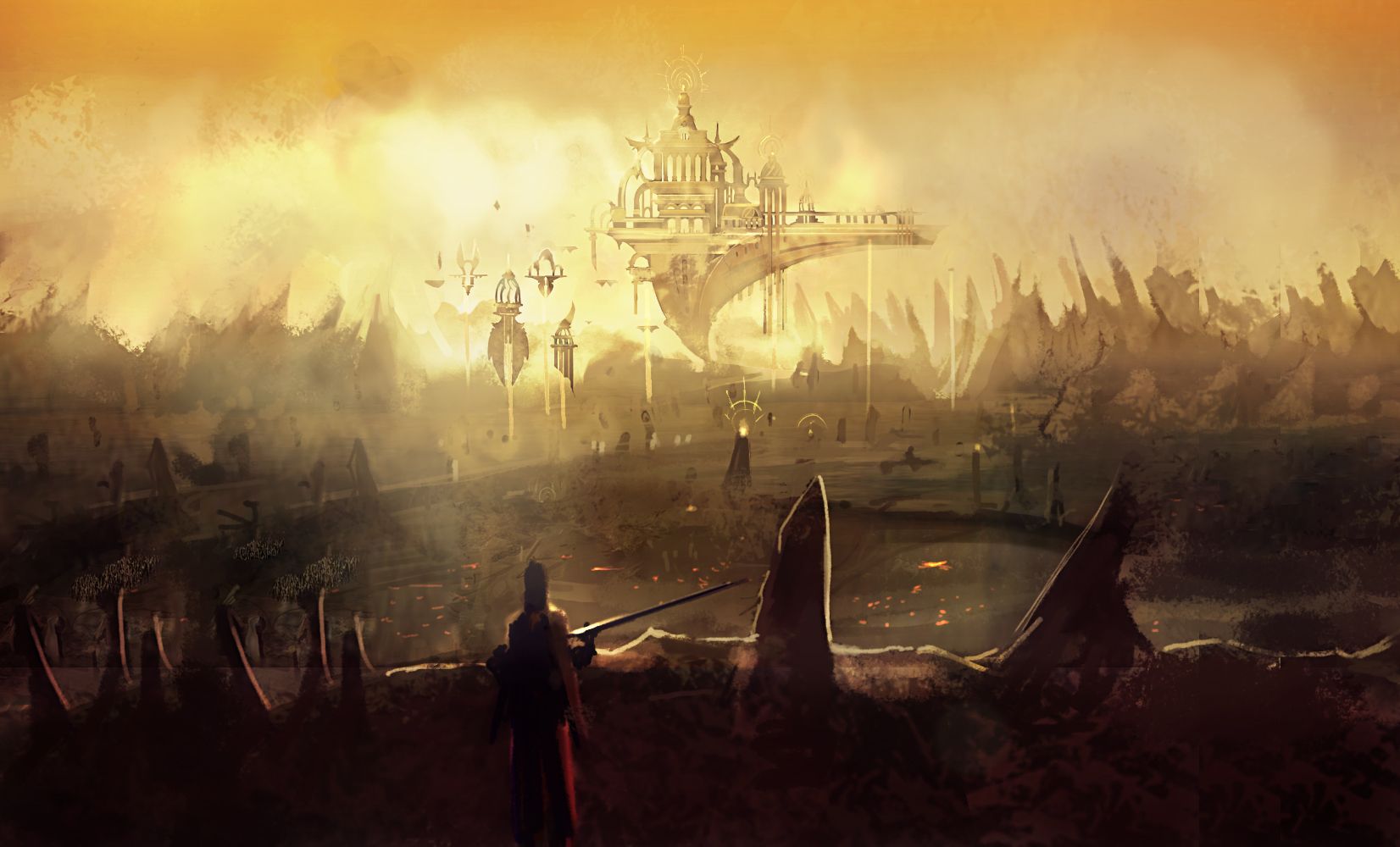
 Shavarath Le Champ de Bataille est une région toujours en proie à la guerre alors que trois groupes rivalisent pour le contrôle du plan, une légion de célestes Archonte, un régiment infernal de diables et une horde grouillante de démons.
Shavarath est composé de plusieurs couches, chacune reflétant un aspect différent de la guerre et des conflits. L'environnement qui entoure ces conflits peuvent être extrêmement varié, car la guerre est extrêmement variée.
Su Shavarath, tout est en quelque sorte lié à une bataille. Ce n'est pas que chaque pied carré soit occupé par des démons et des célestes en conflit direct. Mais si vous n'avez pas ce conflit direct, vous allez avoir un labyrinthe de tranchées qui se trouve entre les lignes de bataille, ou un vaste champ parsemé de cadavres mutilés et d'épave des machines de siège, ou des enclaves où des esclaves lémuriens travaillent sans cesse à forger de nouvelles armes.
Shavarath n'est pas * UNE * seul guerre. Il incarne l'IDÉE de la guerre, sous tous ses nombreux aspects. Cela a commencé à l'aube des temps et cela continuera tant que la réalité existera. Les êtres qui y combattent sont des incarnations de la guerre. Un archonte de Shavarath incarne le courage, l'espoir, la guerre menée pour une cause juste et menée avec noblesse. Un diable incarne la tyrannie, la cruauté, la guerre menée pour conquérir et asservir.
Les esprits inférieurs de la guerre combattent parce qu’ils ne peuvent littéralement pas concevoir aucune autre existence. Si vous leur demandez pourquoi ils se battent - à quoi sert une guerre qui dure depuis des milliers d'années, dans laquelle il n'y a clairement aucun espoir de victoire permanente - ils vous diront que leur guerre se reflète dans toutes les réalités. Ils croient que l'équilibre de la justice et de la tyrannie, de l'espoir et du désespoir, de l'honneur et de la trahison - toutes ces choses sont façonnées par leur bataille. Si le long hiver s'empare de la forteresse des larmes gelées, l'équilibre de l'univers se déplacera légèrement vers la tyrannie. Les soldats célestes savent qu'ils ne pourront jamais GAGNER la guerre; mais ils croient qu'en se battant et en maintenant une ligne, ils soutiennent un équilibre qui doit être maintenu.
Description
Toujours dans un rapport de force approximatif, chacune des trois factions assiège les forteresses des deux autres en même temps qu'ils perdent leurs propres forteresses dans le processus. Au-delà de ces forteresses, la plaine s'étend à l'infini, avec seulement des collines basses pour briser la monotonie. Ce plan est aligné par territoire, les zones détenues par les archontes sont légèrement loyale bonnes tandis que les zones détenues par les diables sont légèrement loyales mauvaises et celles détenues par les démons sont légèrement chaotiques mauvais.
Lorsque des lanceurs de sorts invoquent des serviteurs démoniaques, diables ou démons, ils les invoquent de leur combat sur Shavarath. Pendant la dernière guerre, de nombreuses forces ont augmenté leurs troupes avec des créatures de Shavarath. En outre, de nombreux dirigeants ont convoqué les meilleurs stratèges de Shavarath pour les aider dans leurs tactiques pendant la guerre.
Pendant La Dernière Guerre, de nombreuses factions ont également essayé de puiser dans les pouvoirs de Shavarath en utilisant des machines Occultes. Par exemple, l'Ordre de la Griffe d'Émeraude a tenté de construire une machine dans une zone de manifestation sur Xen'Drik, dans l'espoir d'amener soit une horde démoniaque soit un essaim de lames volantes de Shavarath et des exploiter sous le commandement de Karrnath. Ils ont finalement échoué.
Habitants
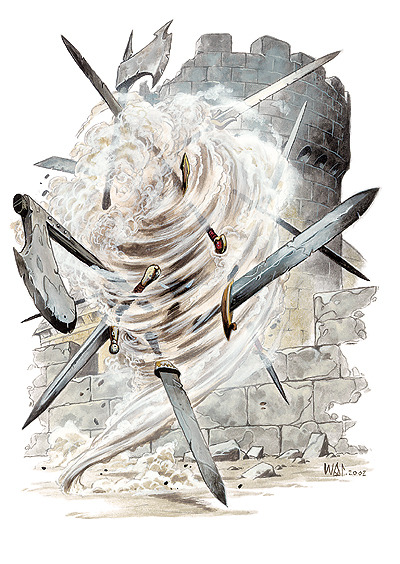
- Pour les visiteurs, les “habitants” les plus menaçants de Shavarath sont les Lames tournoyantes . Ces lames voyagent comme des volées d'oiseaux, volant à travers le plan, attaquant instinctivement les non-natifs de Shavarath. De grandes congrégations de lames tourbillonnantes peuvent devenir des Tempêtes Déchiqueteuses .
- La première des trois principales factions de Shavarath sont les Archontes , y compris les Archonte Chien, Archonte de la justice, Archonte trompette et Archonte des Mots. Leurs forces sont complétées par des arcadian avengers de Daanvi. Le Dernier Bastion, l'Épée de l'Espoir du bataillon de l'aube qui vient et le Pilier de la Justice sont des stratèges connus.
- La deuxième grande faction sont les Démons . Les Démons connu sur Shavarath comprennent les Babaus, Dretchs, Glabrezu, Hezrou, Marilith et Quasits. La Première Terreur, le Boucher Gris et la Marée Sanglante sont des généraux connus.
- La dernière faction sont les Diables , qui incluent les Diables barbelés, les Diables barbus, les Diables d'Os, les Diable de chaînes, les Erinyes, les Diables cornus et les Diablotins. Malecarius, Porteurs des Chaînes, premier seigneur de la légion de l'hiver, est un seigneurs connus.
- D'autres créatures écorchent Le Champ de Bataille, dont les vargouilles
- Comme la plupart des plans, Shavarath a également sa part de Mort-vivant.
- Pour la vie végétale, des Mandragore Démoniaque à Épines parsèment le plan.
Zone De Manifestations
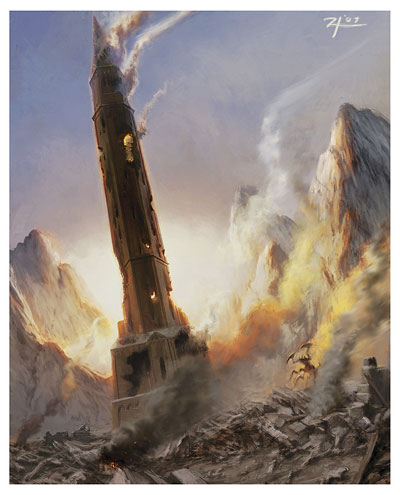
- La Tour de cendre , une tour en ruine au sud-ouest des Terres des Lamentations, est au centre d'une zone de manifestation.
- Les Champs des Désolations dans les Plaines de Talenta, non loin de Karrnath est la plus petite de ces zones de manifestations, seulement une centaine yards carrés.
- La Récolte de la souffrance sur Argonnessen, où les Dragons ont vaincu Katashka le Gardien des Portes, est devenu un zone de manifestation vers Dolurrh et Shavarath.
- La Jungle des Cimeterres dans Valénar, ou Ravar Orioth en elfique, est utilisée comme terrain d’entraînement pour les guerriers Elfiques.
- Tamor Gulch dans le nord-est de Thrane est un lieu de rituel pour les sports de sang depuis des années.
- Après un terrible massacre de la population Brelone et un sombre rituel qui utilisa les quelques survivants, Champs de Valin dans le sud-ouest de Thrane est devenu une zone de manifestation à la fois vers Mabar et Shavarath.
- Une zone de manifestation de Shavarath se trouve dans la Vallée des Lames dans les montagnes Bysehk, où des essaims de lames tourbillonnantes traversent dans Éberron.
Effets sur le plan matériel
Limitrophe
En temps de conflit, lorsque Shavarath se rapproche du Plan Matériel, les effets s'y propagent. Les sorts magiques sont améliorés ou entravés comme ils le sont sur Le Champ de Bataille et des volées de Lames Tourbillonnantes ont été aperçut sur les champs de bataille.
En raison de l'influence de Shavarath sur Éberron, de nombreux chercheurs ont tenté de localiser ses voyages à travers la mer Astrale, afin de déterminer son influence sur La Dernière Guerre. Un groupe de chercheurs pense que le plan était limitrophe en 894 AR, l'année du début de la guerre, le ramenant dans une phase limitrophe en 930 AR et 966 AR. Cependant, une deuxième croyance populaire croit que les années limitrophes seraient plus 890 AR (avant la guerre), 936 AR, 962 AR, et donc devrait réapparaître en l'an 999 AR. Ces érudits ont essayé d'utiliser les essaims de lames tourbillonnantes pour localiser les phases de Shavarath; cependant, La Dernière Guerre a créé de nouvelles zones de manifestations vers Shavarath, rendant ces preuves peu fiables.
Distant
Lorsque Shavarath est distant, aucun effet connu ne se manifeste sur le Plan Matériel.
Historique
- En 922 AR, King Kason de la Brelande a ramener un régiment de démons de Shavarath pour renforcer ses troupes. Cependant, pendant les négociation pour la continuation de leur utilisation, un Marilith s'est libéré et a tué le roi avant d'être renvoyé vers Shavarath.
- En 963 AR, L'Ordre de la Griffe d'Émeraude a crée une Machine Occulte, la Faucheuse, dans la zone de manifestation des Champs des Désolations. Cette machine a inversé le cours de trois ou quatre batailles Karrnath avant qu'elle ne soit détruite.
- En 983 AR, Thrane a fait des arrangements avec les archontes, qui ont mené un grand assaut. La force, appelée la Grande Campagne de l'Est et dirigée par des archontes, a traversé le Passage de la côte. En 984, ils avaient pris Eston et Kalazart, prenant une Forge Créatrice de la Maison Bombardier . Cependant, après avoir récupéré de grands coffres chargés de livres, ils se sont retirés à Fort-de-la-Flamme. Après cette avancé, les Archontes Messagers ont disparu vers Shavarath, et le véritable objectif de Thrane n'a jamais été révélé.
Shavarath: The Eternal Battleground In Shavarath, angels and devils are locked in endless conflict. Radiant blades spill burning blood, and bolts of force smash angels from the sky. In another layer, champions of justice ride armored dragons, assaulting a titanic airship. In yet another, steel krakens tear apart celestial frigates. There’s only one constant in Shavarath: war. The war in Shavarath began at the moment of creation, and it will continue to the end of time. Its primary combatants are immortal, and fallen soldiers return within a day or so. The forces are so evenly matched that a decisive victory is impossible. To outsiders, this war seems pointless. Over the last four hundred years of conflict in Nullius Terram, the Legion of Justice has advanced its front line by perhaps 20 feet. Mortals may look at this and ask, “Why continue to fight? Why not just leave the struggle and do something—anything—else?” In particular, it’s common for mortals to see the vast resources the celestials devote to the war and protest, “Why don’t you help us? You claim to be the Legion of Justice, but innocent people are dying in Thaliost while you fight this meaningless war!” The angel isn’t fighting for a single nation, and this war isn’t driven by gold or politics. The immortals of Shavarath believe that their war is reflected across every reality. Justice. Tyranny. Cruelty. The war in Shavarath is a visible symbol of the balance of power between these forces, and when it shifts in Shavarath, the immortals believe it shifts everywhere. Fallen devils will be reborn. New airships will replace those destroyed. But every tiny victory—every demon defeated, every foot advanced in Nullius Terram—strengthens the forces of justice everywhere. Each angel knows they will never win a truly decisive victory, but as long as they fight, they can at least hold the line. So to an angel, the destruction of a human city—or an entire nation—is trivial. Mortals will die; that’s their most defining trait. Even a sympathetic angel sees a mortal as a snowflake: unique, beautiful, but gone in a moment (and sooner if you touch it). The angels fought long before today’s mortal civilizations existed, and if they hadn’t held this line for countless eons, the Material Plane would be overrun by chaos and cruelty. If you’re a hero, you might look to the angel and say, “What can I do to help? Can we fight at your side?” To which the angel simply smiles and responds, “You already are.” Just as every mortal dreams in Dal Quor and has a shadow in Mabar, there’s a sliver of every mortal soul that fights in Shavarath. The skill and power of these conscripts reflect your own courage and will . . . and just like the angels, this sliver of yours can survive a thousand deaths. So it’s not your place to fight on the battlefields of Shavarath. You do your part by living your life, by fighting for the principles you believe in wherever you may be. There is war in Shavarath, and there will always be war in Shavarath. It can’t be won, and it can’t be abandoned. As a mortal in Shavarath, your primary goal should always be to survive—because in Shavarath, there are a million ways to die. Universal Properties There’s a part of you that’s always been in Shavarath, a sliver of your soul that’s always been at war. When you’re in Shavarath, those instincts guide you. It’s easier to strike a deadly blow, or to grit your teeth and fight on through pain or injury. War Magic. When a creature casts a spell that grants a bonus to AC, attack rolls, or saving throws, or a spell that grants temporary hit points, the duration is doubled. Spells with a duration of 24 hours or more are unaffected. Unquenchable Fury. A creature has advantage on saving throws against any spells or abilities that charm a target, as well as against the calm emotions and sanctuary spells. In addition, the duration of these effects are halved, to a minimum duration of 1 round. While a barbarian is raging, its rage can’t be ended early unless it’s knocked unconscious. Fight On. On a creature’s turn, it can use a bonus action to spend 1 Hit Die. It rolls the die and adds its Constitution modifier, regaining hit points equal to the total (minimum of 1). Once a creature benefits from this property, it must finish a short or long rest before it can do so again. Bloodletting. When a creature scores a critical hit with an attack that deals piercing, slashing, or bludgeoning damage, it can roll one of the attack’s damage dice one extra time and add it to the extra dice of the critical hit. Flexible Time. Time’s passage varies between Shavarath’s layers. In many, time passes at the same rate as on the Material Plane; if you spend an hour fighting in the Burning Sky, an hour passes in Eberron. But other layers move at different speeds; you can spend a month in the trenches of Nullius Terram and find that less than three days have passed in Eberron. A creature with proficiency in Arcana can determine the passage of time in their layer by succeeding on a DC 14 Intelligence (Arcana) check. Denizens All creatures in Shavarath are part of the war, whether they’re soldiers, tools, or victims. Those that fight are tied to legions, such as the Legion of Justice or the Legion of Tyranny. The immortals that fight in the war believe that each legion is governed by a higher power—simply called Command—and that these powers collectively shape the layers and determine the terms of battle. Immortals don’t question Command or wonder why things are the way they are. Immortals never deal directly with the Command of their legion, and they don’t even know if these powers have physical forms. Vast legions are broken into smaller cohorts, which are in turn divided into centuries of one hundred immortals, each representing an aspect of war like pain, mercy, or despair. A few special centuries and individual immortals can move between layers, but the majority are bound to their cohort and their layer. Immortals can be reassigned to new cohorts, and promoted or demoted—usually tied to a physical transformation. This minimal movement between layers maintains balance, as cohort leaders must make use of the forces in their layer, while legion commanders can strategically direct the centuries that can move between layers—what layer is Justice pressing at the moment? An offensive’s primary goals often focus on destroying an important opponent. The Legion of Justice knows it can’t drive Tyranny from Nullius Terram, but defeating Lord Commander Astaralax is an important victory for the light, even though he’s an immortal and will eventually return. Sometimes an especially grand victory might cause an immortal to be “discharged”—when this happens, a new being of equivalent power takes its place, but it has a new personality, and the original spirit is eradicated. Such victories are worth even more points in the grand system that calculates the balance of power between the legions.
Conscripts In Nullius Terram, the trenches are filled with miserable soldiers waiting for the offensive. The City of Knives is filled with innocents struggling to survive and looters taking advantage of the chaos. There are dragons in the Burning Sky—but none of these are mortals. They’re all manifestations, ideas conscripted to serve the purpose of the story. Conscripts appear to be sentient, but have no depth of personality or memory, can’t leave their layers, and can’t accomplish anything meaningful unless accompanied by a celestial or fiend. It’s only when the angel leads a charge that the conscripts of Nullius Terram matter, and though they inevitably die, they eventually reform. Conscripts can use the statistics of the creatures they appear to be, but may not have their full capabilities; the dragons of the Burning Sky aren’t as intelligent as true dragons. A conscript usually appears indistinct; it’s hard to focus on them, and it’s often easy for a viewer to imagine conscripts are members of their own species. Sword Wraiths All mortal creatures have a spiritual connection to Shavarath, and there’s a sliver of their spirit in the plane. The strength of this sliver is determined by the mortal’s courage, willpower, and martial drive. Conscripts are formed from this spiritual energy, but have no awareness and may be formed from multiple slivers; unlike Irian’s embers, the conscript doesn’t resemble the source. Sometimes, on the death of a great mortal warrior, echoes of their personality and martial spirit can coalesce into a sword wraith (though its abilities may vary based on the champion it echoes). Unlike standard conscripts, sword wraiths are capable of meaningful action even without the direction of an immortal and can command conscripts of their own. A sword wraith has the appearance of its mortal source and some of the memories, but it’s only an echo of the mortal, much like the traces of memory that allow you to speak with dead. Sword wraiths reconcile their memories with the war within the layer. If there’s a sword wraith of Karrn the Conqueror commanding troops in Nullius Terram, he believes that he’s fighting for Karrnath and can’t be convinced otherwise; after all, he’s only a memory, and there are limits to his ability to reason. So adventurers might meet Lhazaar as she commands a ship in the Bloody Sea. Dhakaani champions, the Morin clan founders, heroes of the Last War—any of these could be found as sword wraiths, serving the legion that best matches their values. There are sword wraiths of many patron ancestors of the Tairnadal elves; however, these aren’t the patrons themselves, simply echoes left behind. While sword wraiths generally form after a mortal’s death, the slivers of especially remarkable heroes can manifest sword wraiths even while alive. King Boranel of Breland surely has a sword wraith serving in the Legion of Justice, and it’s possible an adventurer could meet their own sword wraith while exploring Shavarath. Whirling Blades Shavarath’s whirling blades are enigmatic and deadly. These manifestations are swarms of animated weapons—knives, swords—that tear through the air, eviscerating anything unfortunate enough to be in their path. Sometimes they follow consistent paths like flocks of birds. Other times, they appear in a flash, lashing at victims, then vanishing. The whirling blades may be a defense mechanism designed to keep mortals from interfering with Shavarath, and the longer mortals remain in Shavarath, the more likely they are to be struck. These blade storms can also leak out into the Material Plane in areas of particularly brutal conflict, spilling blood on all sides. Whirling blades might take the form of a cloud of daggers, though the area and damage might both increase, or the most devastating manifestations could be represented with a blade barrier that slowly moves across the terrain.
Angels
Most of Shavarath’s celestials serve the Legion of Justice, which embodies the concept of war fought for a just cause. Cohorts and their component centuries represent specific concepts within that broad ideal. The Century of Mercy shows kindness to fallen foes, while the Century of the Innocent Guard protects civilians—even if they’re just conscripts, the idea of civilians—and avoids collateral damage. Angels won’t conscript adventurers, but also won’t leave their duties to help them.
The angels of Shavarath have a martial aspect, most appearing clad in armor, with their faces—and species—hidden behind full helms. Any sort of angel can be found in Shavarath, with its power reflecting its position. Planetars command centuries, while each cohort is commanded by a solar or a celestial being of greater power, such as an empyrean. While the angels serve Justice Command, there are a few units also devoted to the Sovereigns. The Century of the Sun asserts that Dol Arrah is Justice Command, and sword wraiths formed from paladins of Dol Arrah serve with this century.
While the Legion of Justice is the largest of the celestial legions, there are others that operate on a smaller scale. Most notable of these is the Legion of Freedom, reflecting the ideal of war fought to end oppression. They rarely field large armies and instead use swift strikes and guerrilla war; these angels embody the idea of champions who fight impossible odds for a noble cause, even if this forces them to follow ignoble paths.
Demons
Demons represent the chaotic savagery of war. Most serve the Legion of Cruelty, and are wild, brutal, and far less disciplined than the devilish forces of Tyranny. They torture civilians, have no concern for collateral damage or their own losses, and make little effort to hold territory. Their focus is purely on inflicting maximum damage on foes and their own region alike. The Century of the Salted Earth devastates the regions they fight in, while the Century of Terror creates hideous displays with the corpses of their victims and delights in psychological warfare. The Legion of Cruelty slaughters devils and angels with equal glee, and is despised by Justice and Tyranny alike.
All manner of demons can be found in the Legion of Cruelty; their form reflects their military role, and many wear battered armor, steel scales, or are simply coated in fresh blood. Barlguras and hezrous are brutal shock troops. Chasmes and vrocks flood the skies, while goristros are living siege weapons. Mariliths and balors command centuries, while cohorts may be led by beings with the power of demon princes. As with all immortals of Shavarath, it’s important to remember that these demons are first and foremost embodiments of war; regardless of what role a demon might play on another plane, here, it’s devoted purely to the eternal war. It could be that there is a Cohort of Bones that uses undead conscripts in battle, commanded by a fiend with the stat block of Orcus—but this commander wouldn’t have Orcus’s ambitions, instead focusing on crushing the Cohort of the Sun in its layer.
As with angels devoted to the Sovereigns, some demons dedicate themselves and their unit to the Dark Six. Many within the Century of Terror wear the flayed skins of their foes and assert that the Mockery is part of Cruelty Command.
Devils
Devils can be just as cruel as demons, but they represent the disciplined practice of war in pursuit of oppression, and most serve the Legion of Tyranny. They seek to crush hope, and no form of treachery or dishonorable conduct is too low for a devil. However, they’re far more disciplined than the savage hordes of the Legion of Cruelty, working with precision and careful plans. The Century of Chains forces enemy conscripts (and unlucky adventurers) to fight for them, and uses civilian conscripts as living shields. The Century of the Serpent is always willing to negotiate and makes many pleasing offers, but any agreement inevitably leads to betrayal.
All forms of devils can be found in the Legion of Tyranny. Their sole focus is war; they dominate and corrupt conscripts, but don’t seek mortal souls from the Material Plane. Bearded and spined devils serve as basic troops, while elite squads of erinyes descend from the sky. Amnizu and balors command centuries, and beings with the power of archdevils lead cohorts.
The devils of the Cohort of Misery say that the Mockery is part of Tyranny Command, a belief that fuels a bitter enmity with the demons of the Century of Terror. Curiously, the Cohort of the Iron Hand maintains that the Sovereign Aureon leads Tyranny Command, and that they are simply enacting his vision for universal order.
Weapons of War
The battlefields of Shavarath contain engines of war unlike anything imagined on Eberron. Steel krakens in the Bloody Sea. Massive cannons that could bring down Sharn’s towers with a single volley. Immense monstrosities that serve as living battering rams. However, even the grandest of these creations isn’t a product of industry or arcane science—these too are conscripts. The mighty cannon isn’t forged in some great foundry, but formed by the layer itself, because it’s part of the idea of this battle. Fernia is a plane of industry where an artificer might learn amazing techniques from the dao; by contrast, in Shavarath, an artificer might be inspired by what they see, but most of the greatest weapons can’t be replicated.
L
a
yers
Shavarath has countless layers, each one reflecting a different struggle. There’s a vicious guerilla war in the Forest of Shadows. The Monolith is a mighty fortress that’s always under siege; occasionally, the attackers tear it away from the defenders, at which point the former defenders begin the siege anew. Layers are connected by a network of heavily fortified portals, though the most powerful immortals can shift between layers under their own power. Every legion has a command center or headquarters in the layers in which they operate. The legion might only assign a few centuries to smaller layers, but if a layer’s large enough—such as Nullius Terram—it may host an entire cohort.
These are a few examples of layers of Shavarath, but almost any vision of war could spawn a layer.
N
ullius Terram
One of the largest layers, Nullius Terram is a battlefield the size of a small nation. It’s divided by several deep, heavily fortified trenches, which are separated by blasted regions of scorched earth, blast craters, and bones. Nullius Terram’s multiple trench lines twist and curve throughout the region, and in the lands between the trenches lie strategic outposts. The region is marked by constant barrages and terrible tools of mass destruction—widescale cloudkill, curses that transform conscripts into killers, and worse.
Tyranny, Cruelty, and Justice are the three active legions in this region. Justice has a difficult position in Nullius Terram, but has been slowly gaining strength. Periodically, the commanders send troops to clash in the fields between the lines, either in simple skirmishes or full offensives. Ultimately, the theme of this layer is that of slow, agonizing stalemate, and the suffering war can inflict on both the land and the soldiers.
Nullius Terram is noteworthy for its flowing time; for every 10 minutes that pass in this layer, only 1 minute passes in Eberron. So it’s a long, slow struggle—you could spend months here and only miss a week in Eberron.
The Burning Sky
The sky is filled with many airships, some large enough to be floating towns. A few islands of rock float amongst the solid clouds, but if there’s any land below, it’s hidden by deadly fog. While there are skirmishes on the stone islands, most of the action occurs in the skies. Winged angels and fiends circle and duel, while conscripts guide dragons and other aerial mounts.
The City of Knives
It looks like this was once a city of marvels, with towers rivaling those of Sharn, gilded monuments, museums, gardens, and more. But the City of Knives lies between vast armies of the Legion of Justice and the Legion of Tyranny, and it represents the impact of brutal war on a glorious city. Ongoing bombardment is a constant threat. The civilian conscripts are fighting their own war for shelter and supplies; some rally together for the common good, while others have become looters and brigands. Justice and Tyranny hold their positions on either side of the city, relying on bombardment and occasional assaults. The Legion of Cruelty spreads terror within the city, while the celestials of the Legion of Freedom seek to rally the common people against all enemies.
The Bloody Sea
There are no continents in this aquatic layer, but a handful of islands support the warring fleets. Grand and powerful warships clash in the open waters and bombard settlements. The ships may be familiar, but there are many other unusual engines of war: constructed krakens, submersible warships, monstrosities and dragons bound to service—wonders that the people of Eberron can imagine but can’t yet create. The pirate queen Lhazaar surely has inspired a sword wraith in the Bloody Sea . . . but which legion does her sword wraith fight for?
The Warring Cities
At first glance, this layer looks like the blasted land between the trenches of Nullius Terram. It’s home to a number of warring cities, but they aren’t static settlements. Rather, some are floating fortresses that dwarf the Argonth of Breland, and others walk on two legs. The warforged colossus in Eberron: Rising from the Last War could be used as a model for a small fortress.
Planar Manifest ations
Here are a few ways Shavarath can affect the Material Plane.
Manifest Zones
Manifest zones tied to Shavarath often inspire people to violence and aggression, and can convey any of the plane’s universal properties. These zones can be dangerous places to dwell, but can also encourage martial discipline and enhance training. While many of the greatest weapons in Shavarath can’t be removed from the plane, manifest zones tied to Shavarath can often provide inspiration for artificers and smiths, and it may be possible to craft deadly enchantments in a Shavaran manifest zone that simply aren’t possible beyond it.
Manifest zones rarely act as gateways to Shavarath, but anything is possible when Shavarath is coterminous.
Coterminous and Remote
When Shavarath is coterminous, people are quick to anger and must be careful to not fight over trivial things. Angry words are more likely to produce brawls, and restless thought to lead to riots or revolutions. The plane’s War Magic and Unquenchable Fury properties spread worldwide while it’s coterminous, encouraging violence. Meanwhile, in Shavaran manifest zones, outbreaks of intense violence can draw whirling blades into the zone, slaughtering people on all sides.
Shavarath is traditionally coterminous for 1 year every 36 years. Throughout history, some military leaders have plotted campaigns around this, while peaceful communities plan ahead to contain violence. In addition to its regular cycle, Shavarath frequently grows coterminous for a single day; predicting these periods was critical for battle strategy during the Last War. Shavarath is traditionally remote for a year every 36 years, which prevents the occasional single-day coterminous spikes, but otherwise has no apparent effect on the Material Plane.
S
havaran Artifacts
Unlike Fernian elementals, the immortals of Shavarath don’t create their weapons and tools of war; they’re shaped by the plane itself. Many of the grandest weapons—explosives that can level cities, airships the size of small towns—either can’t be removed from Shavarath or wouldn’t function elsewhere. But Shavarath is a potential source for armor, weapons, and tools of war, from common items to the artifacts wielded by the commanders of cohorts. These may be some of the most powerful weapons in the multiverse—but they’re also irreplaceable. You can steal the Wand of Orra’Cys, lord of the Cohort of Bones—but he’ll certainly want it back, and may deploy demons, warlocks, or other agents to reclaim it.
The legion an item is associated with affects its appearance. Tools of the Legion of Justice are bright and inspiring, while those tied to the Legion of Tyranny are grim and intimidating.
S
havaran Stories
The simplest story is one of survival, escaping from Shavarath before being destroyed by the endless war. But Shavaran adventures touch the Material Plane too; here are some ideas.
Blades of War. Bombardier builds a forgehold for manufacturing weapons on a manifest zone tied to Shavarath. All goes well—until a planar spike unleashes whirling blades and everything is thrown into chaos. Making things worse, some experimental constructs have gone berserk, an experimental Shavaran explosive is detonating in five hours . . . and it’s possible an agent of the Lord of Blades has infiltrated the hold in the chaos. Can the adventurers get things under control?
The Surge. In Fairhaven, an artificer creates an eldritch machine to channel Shavarath’s power—but it works too well. When Shavarath becomes coterminous, the eldritch machine amplifies everyone’s aggression. Riots and looting break out across the city, while the guards act brutally to contain it. Can the adventurers find and deactivate the machine before the city tears itself apart? Is this the work of a single reckless artificer, or tied to the cult of Rak Tulkhesh or the Order of the Emerald Claw?
Deadly Weapon. The adventurers find a corpse clutching a vorpal sword—the blade of Misery, an erinyes of the Legion of Tyranny. An agent of the Argentum died while attempting to take the blade to a place it could be destroyed. Will the adventurers try to complete the mission, or claim the powerful sword as a trophy? If they choose to keep it, Misery will eventually come looking for her sword . . . and this cruel immortal will want to take some time to torment any mortals who have sullied her blade.

Les 13 Plans Majeurs: Daanvi · Dal Quor · Dolurrh · Fernia · Irian · Kythri · Lamannia · Mabar · Risia · Shavarath · Syranie · Thélanis · Xoriat
Plans Fondamentaux: Le Plan Astral (Siberys) · Le Plan Matériel (Eberron)
Plans et demiplans transitifs: Le Plan Éthéré · Le Plan de l'Ombre