This is an old revision of the document!
Druide
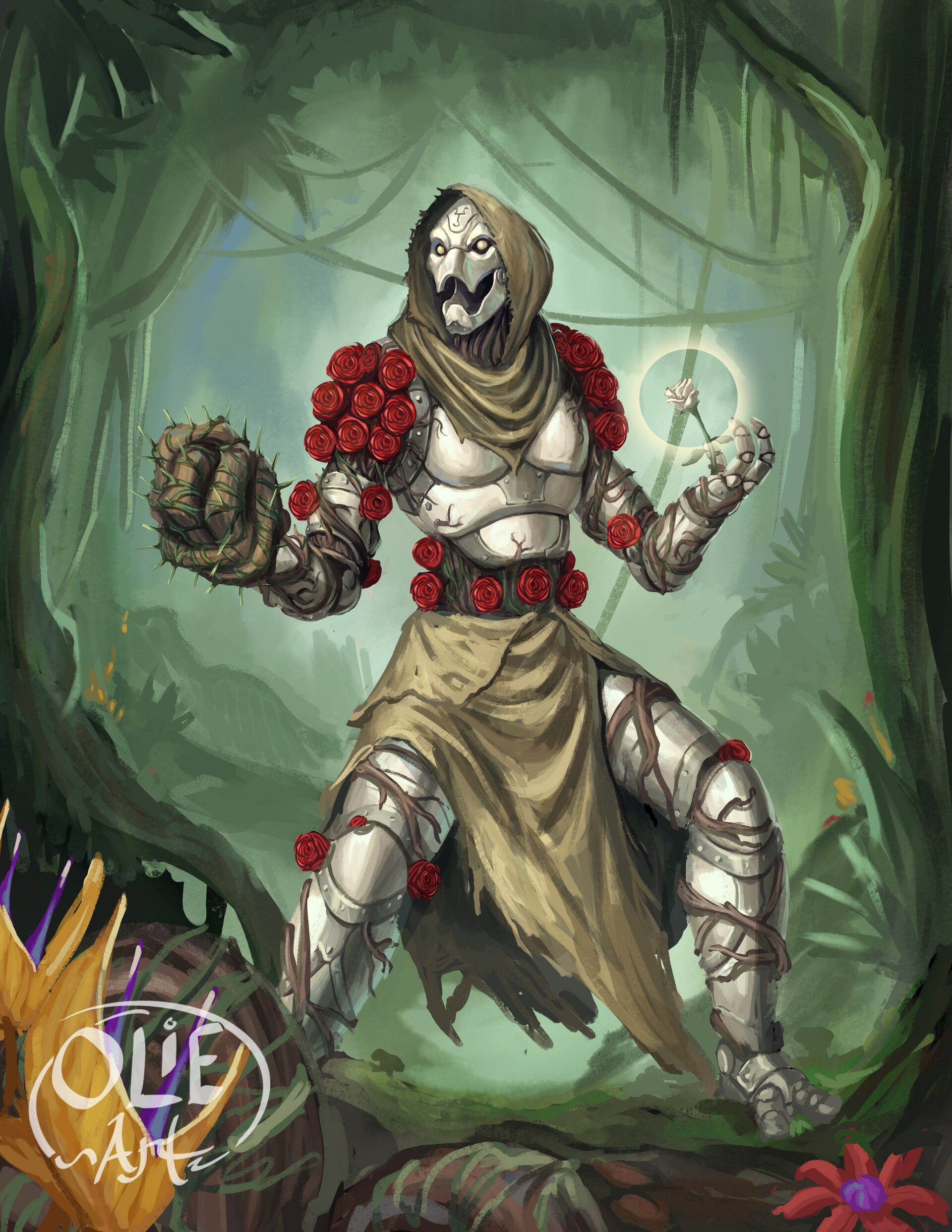
 Le druidisme est apparue en Khorvaire il y a seize mille ans, lorsque Vvaraak, un dragon noir (bien que certaines sources affirment qu'elle était verte), prédit une grande invasion planaire. Afin d'aider les Humanoïdes à repousser cette invasion, elle enseigna aux premiers druides Orcs le lien entre les trois Premiers Dragons et comment exploiter ce pouvoir et l'utiliser pour sceller les portes vers les autres plans. Ces druides originels sont toujours connus sous le nom de Gardiens et continuent de protéger Khorvaire des invasions d' aberrations venues d'autres plans.
Sept mille ans après que Vvaraak eut formé les premiers Gardiens, l'invasion prédite eut lieu lorsque des illithides et des Maîtres Démoniaques Daelkyr envahirent le Plan Matériel depuis une porte vers Xoriat. Les Gardiens réussirent à repousser cette invasion et sauvèrent ainsi les Humanoïdes de l'esclavage.
En -4100 AR (4900 ans après que les Gardiens eurent repoussé l'invasion), une autre grande tradition druidique naquit dans les Confins d'Eldeen. Au cœur des forêts anciennes, un grand pin nommé Oalian fut éveillé. Oalian est depuis devenu l'influence centrale de nombreuses sectes druidiques d'Eldeen, notamment le Peuple_du_frene, les Protecteurs des Bois, les Chanteurs Écolo et les Enfants de l'Hiver. Bien que chacune de ces traditions ait des croyances différentes, elles partagent toutes une dénominateur commun en leur vénération pour Oalian.
Bien que les Confins d'Eldeen viennent souvent à l'esprit lorsqu'on pense aux druides et au druidisme, on en trouve partout sur Khorvaire.
Langage Druidique
Il n'existe pas d'alliance universelle entre toutes les sectes ou cercles druidiques, alors pourquoi cette langue partagé par tous? Lorsqu'un druide apprend le druidique, « la langue secrète des druides », c'est un secret partagé par tous les druides, quelle que soit leur secte ou leur tradition. Les érudits restent perplexes quant au fait que cette langue soit restée secrète et indéchiffrable pendant des millénaires. Même les linguistes les plus doués déplorent que ses motifs et ses sons ne semblent discernables qu'à ceux qui possèdent une compréhension primitive profonde. Pourtant, elle demeure inapprenable et inenseignable.
L'hypothèse est que le druidisme est un langage magique inné, dont certain peuvent percevoir le sens de l'intérieur d'eux-même. C'est le langage de la nature elle-même.
Les druides et la civilisation
Croyance Druidique d8 La Civilisation…
- 1 … représente une menace pour le monde naturel et vous luttez pour la tenir à distance. (Peuple du Frêne)
- 2 … peut vivre en harmonie avec le monde naturel et vous servez d'ambassadeur entre les deux. (Protecteurs des Bois)
- 3 … permet aux faibles et aux malades de survivre ; votre devoir est de réduire le troupeau. (Enfants de l'Hiver)
- 4 … est peuplé de créatures naturelles, mais le plus important est de les protéger des menaces surnaturelles, telles que les Mort-vivants et les aberrations (Gardiens).
- 5 … est dérangeante, vous restez étonné que vos camarades puissent supporter ses étrangetés.
- 6 … est fascinante et vous êtes toujours curieux d'en savoir plus sur ses bizarreries.
- 7 … est condamnée, et vous savez que la nature se lèvera et l'anéantira, tôt ou tard.
- 8 … fait toujours partie de la nature, et tout comme le rat, la nature adapte ses manières pour supporter les villes.
Druids stand between the civilized world and the wild. Some see civilization as an unnatural construct that should be destroyed. Others simply want to maintain a balance between the two. You can use this table as a quick guide to determine a druid’s outlook, and whether any philosophical challenge aligns with one of the primary sects, or if a new one might be brewing somewhere in the depths of Khorvaire, still unknown to the world.
CHG1101: Eldeen Cultures & Customs Druids draw primal magic from the world itself. The process isn’t like the spells of a wizard or the tools of an artificer, nor is it a divine petition to a higher power. Well, not exactly. Legend recounts how the great progenitor dragon Eberron enveloped the jealous evil of Khyber in the living prison that would become the world. If arcane magic comes from the tears of Siberys above, then Druidique magic is the blood and breath of Eberron herself, granting power to those who seek to defend her and the natural order from the threats beyond. Most druids are swathed in tradition, usually initiated by a sect that teaches the secrets of this primal magic while also charging the aspirant with specific duties. While some sects are loosely aligned, each one has its own ideas as to the role their kind should play in the world.
Druids and Nature Clerics Traditionally, the Légion Souveraine is a civilized faith with shrines in the great cities of the Five Nations but a number of shrines to deities tied to nature can be found in the wilds. Balinor is the Sovereign of the Hunt, Arawai brings nature’s bounty, and the Dévoreur embodies its destructive power and the hunger that reclaims its waste. In Eberron, a priest of Balinor isn’t inherently required to follow one trail or the other, but the main differences between the two lay in how command of nature is granted,and the purpose for which they use it. While it’s Commun for the two paths to recognize one another, such respect isn’t always equal. From a philosophical perspective, a druid is an envoy of nature with a connection to the environment itself, not a servant of a higher power. By contrast, the cleric serves a higher power and holds dominion over the natural world. While druids shun such metal armaments, nature clerics usually practice combat in manmade heavy metal armors until proficient. Yet, clerics lack the primal understanding required to communicate in Druidique and to assume Wild Shape, which is a reflection of the druid’s deep connection to the natural world. Such differences lead to a deep disconnect between the typical druid and a nature worshiping cleric. The Warden of the Wood might see the priests of Balinor as an arrogant outsider, a city-dweller who believes that Humanoïdes hold some sort of divine right over the planet, which is admittedly often the case. To the priestess of Arawai, nature is something that serves the people and her primary concern is ensuring a bountiful harvest, not driving farmers from their fields. While this is the obvious contrast, it’s possible to create a character who uses one class while following the opposite path. Perhaps you want to play a priest of Balinor but you love the idea of hunting in the form of a wolf, or you want to be Peuple du Frêne but have no interest in ever assuming a Wild Shape. While there will be the occasional disconnect, like the Peuple du Frêne cleric can’t use Wild Shape, the Balinor druid can’t turn Mort-vivant, look to juxtapose these ideas to best match the story and experience you’re looking for, using backgrounds like the acolyte or outlander to cultivate the option.
Druids and Civilization Druids stand between the civilized world and the wild. Some see civilization as an unnatural construct that should be destroyed. Others simply want to maintain a balance between the two. You can use this table as a quick guide to determine a druid’s outlook, and whether any philosophical challenge aligns with one of the primary sects, or if a new one might be brewing somewhere in the depths of Khorvaire, still unknown to the world.
DRUID SECTS
- The Wardens of the Wood are about balance. They help people live in harmony with nature, and act to protect both the innocent and the wild. They are the largest of the Eldeen sects and the one that gets the most new recruits, as they actively work to help and protect the people of the Eldeen Reaches.
- The Gatekeepers are about protecting nature from the unnatural. They fight the forces of Khyber and Xoriat, and maintain the seals that hold the Daelkyr at bay.
- The Children of Winter are about the cycle of life… and death. They believe that civilization has thrown this cycle out of balance and use disease and other means to test and thin the herd. They further believe that there will come a time when an apocalypse cleanses the world, clearing a path for its rebirth. Some of them believe the Mourning is the first stage in this disaster… and that it should be welcomed and accelerated.
- The Ashbound oppose civilization. They despise agriculture, cities, and all the ways in which civilization seeks to control or abolish the natural world… but they are especially opposed to those who warp the natural order with unnatural magic. They are the most zealous and dangerous of the sects. This sect includes a significant number of barbarians along with rangers and druids.
- The Greensingers are ambassadors to the Fey. They linger in areas that are close to Thelanis, and often travel between the planes. While they are most strongly connected to the Fey, some Greensingers are more broadly interested in traffic with all of the planes.
*Seren Dragonspeakers
The critical thing is that these five sects are NOT all of the druids in the world! To begin with, we’ve said that there’s around a dozen active sects in the Eldeen Reaches (which obviously means that there were thirteen, but one’s gone missing). We have never described the other Eldeen sects, because this is part of “There’s a place in Eberron for anything in D&D…” We intentionally left those other sects open so DMs have an easy place to drop in new sects of their own or interesting sects from other settings or sourcebooks. It’s possible we will add others in future material; I have an idea for a shifter sect with a focus on shapeshifting and living among the beasts of the wild, which hasn’t made as much of an impact as the others because its members are largely invisible within the woods. But the point is: These five sects exist to give you hooks to play with, but they are not intended to cover every possible sect.
Beyond this, within canon we’ve already presented a number of other druidic sects.
- The Shadows of the Forest , from the King’s Forest of Breland
- The Mask Weavers** of the Talenta Plains
- The Guardians of Rusheme in Xend’rik
- The Siyal Marrainof the Tairnadal elves
- The Followers of the Broken Path**, a warforged sect in the Mournland
- The Seren Dragonspeakers of Argonnessen
If I had the time to go through every sourcebook, I’m sure I could find more examples of druidic sects. The five named sects are those with the greatest impact on the Five Nations, and have been cast into the spotlight by the Eldeen secession. But you’re not limited to these five choices when you make a primal character of your own.
Druidique Circles in the Eldeen Sects Thousands of years ago, the black dragon Vvaraak foresaw a catastrophe: the planar incursion from Xoriat, the Realm of Madness. Breaking with the traditions of Argonnessen, Vvaraak came to western Khorvaire and shared her knowledge of natural magic with the orcs of that region. Her acolytes became the first Gatekeeper druids, and they played a crucial role in defeating the daelkyr invasion. As the Gatekeeper sect spread north into the Towering Wood, its traditions were adapted by Férals, Elfes, and eventually Humains who dwelled in that region. Four distinct traditions emerged over the course of centuries, and while there are other lesser sects, these are the paths that have survived the test of time. Each of these sects has a strong presence in the Confins d'Eldeen, and over the last century many have been extending their influence into the Cinq Nations. As a new druid of the Eldeen, you may have been born into your sect, discovered it as you fled the Mourning, or turned your back on your birthlands when disgusted by La Dernière Guerre.
Each of the Eldeen sects is a distinct order with unique customs, territory, and leadership. However, all respect the Great Druid Oalian and his oasis grove, the Coeurvert, as a safe haven for druids of all paths. Oalian is an awakened greatpine, who some say was awakened by Vvaraak hersElfee. Regardless of the truth of this, Oalian has been teaching initiates and mediating disputes for many thousands of years. A druid’s choice of circle is usually related to their sect, but it isn’t dictated. Each circle typically provides a connection to the Commun environs and affinity to certain beasts that sect favors when shapeshifting. The following descriptions suggest circles that are especially strong matches for each sect but these are suggestions, not absolute restrictions. For instance, the Circle of the Spiritlords (Xanathar’s Perdu Notes) are a Commun choice for hobbit druids of the Plaines de Talenta, while a druid who’s learned techniques from the Circle of the Land could join a sect or remain unaligned, just as the Circle of the Arbiter is a new subclass that is designed to work with any of the Eldeen sects. When creating a druid in Eberron, selecting a sect is a way to add depth to the backstory of a character and to establish why the druid left to seek adventure. The Aspirant background is a good match for a character closely tied to one of these sects, but there are many other backgrounds, ranging from hermit to folk hero, that can work well for a protector of nature.
The Peuple du Frêne The Peuple du Frêne believe that nature and civilization are at war, and they are the champions of the wild. Peuple du Frêne druids seek to defend the natural world from the depredations of civilization and see arcane magic as a dangelrous and corrupting force. In frontier regions, the Peuple du Frêne launch guerilla strikes against encroaching settlements and make brutal examples of poachers. Ambitious Peuple du Frêne even attack the holdings of Maisons Marquées Du Dragon and release bound Élémentaires in their service. The Peuple du Frêne are the warriors of the natural world. Many embrace the Circle of the Moon and fight with tooth and claw, while others tend to follow the Circle of Seasons (Xanathar’s Perdu Notes). Barbarians are Commun among the Peuple du Frêne, drawing on the primal Furie of
the natural world and it isn’t unCommun to see Peuple du Frêne barbarians of the Path of the Storm Herald and Path of the Totem Warrior dashing into battle alongside Peuple du Frêne druids. This is a difficult path for a player character to follow. How can you walk through the natural world with your allies without smashing it? How can you condone the presence of a wizard or an artificer? If you play an Peuple du Frêne druid, work with your DM to define the reason you are out in the modern world and make sure that reason is important enough that it overOmbres such lesser transgressions and avoids conflict within the party. If the mission is to find a way to reverse the Mourning or to overthrow the Maisons Marquées Du Dragon, one could Belvédère the actions of the party wizard as long as all work towards that greater good. A considerate Peuple du Frêne might still ask a wizard to think carefully about the cost of magic and the harm they could cause and encourage that wizard to limit their arcane casting.
The Enfants de l'Hiver Death, disease, and decay are all part of the natural order. Disease keeps populations under control, death weeds out the weak and makes room for new life, while decay sustains the future. The Enfants de l'Hiver embrace this reality as the harshest of truths. They firmly believe that if this natural order falls out of balance, Eberron will act to correct things on her own. If civilization goes too far, an excruciating summer or winter will devastate any hope of harvest to feed nature, and such famine will brutally restore the balance, wiping out all modern nations to start anew. Most outsiders regard this as apocalyptic nonsense, until the Mourning. Many of the Children of Winter believe the Mourning is the beginning of Eberron’s cleansing, and they might be right. The Enfants de l'Hiver are a grim sect with grim responsibilities. They firmly believe in survival of the fittest, sometimes testing those who oppose them for the sake of that balance, but rarely to the death. Druids tied to this sect can be tasked to hunt down and destroy creatures that defy the cycle of life and death, search for the answer to the Mourning, or fight to stop the coming apocalypse. On the darker side, there are others in the sect who believe that civilization must be brought to heel. Typically, these are extremists who unleash plagues in the great cities of Khorvaire and spur conflict to weed out the weak. The Circle of Seasons (Xanathar’s Perdu Notes) and Circle of Spores (Guildmaster’s Guide to Ravnica) are both found in the Children of Winter, and Monster Hunter and Gloom Stalker Rangers have their place within the sect. While the Children abhor the use of medicine to save the weak who might sap valuable resources from others, it’s acceptable to heal a champion who places themselves in harm’s way for a worthy cause.
The Gardiens The Gardiens are sworn to battle aberration, fiends, and anything that has no place in the natural world. While they are found in the Confins d'Eldeen, the roots of the Gardiens have always come from the Frontières de l'Ombre, and there are many Marchers who support the old ways even today. The Gardiens have supporters within Maison Tharashk and, more recently, send agents across Khorvaire to toil in the long Ombres cast by the Marqué par le Dragon house. Gatekeeper agents battle Cults of the Dragon d'En-dessous and agents of the Daelkyr, watching for any signs of another planar incursion. If you’re playing a Gatekeeper, do you have a specific mission—a cult to bring down, an artifact you must protect? Or are you simply watching for any signs of unnatural influence? The founders learned the beginnings of their primal Druidique magic from Vvaraak, and any druids and Rangers of many origins can be found in its ranks, especially the Circle of Dreams, Horizon Walkers, and Monster Hunters.
The Chanteurs Écolo The Chanteurs Écolo believe the magic of the Fée to be integral to natural, complimenting and enhancing its majesty, and encourage close ties between Thélanis and Eberron. They work to improve relations between mortals and the Fée, teaching people how to safely interact with the Fée, and serving as ambassadors to the faerie realms. While the bards and druids draw the most attention, many Chanteurs Écolo are simply people who learn the stories of the Fée and follow their traditions, seeking to live in harmony with their Fée neighbors. While the Chanteurs Écolo are united by core principles, many Chanteurs Écolo serve an Archifée patron with ties to their topographical region, and they might work to advance the specific agenda of their patron in the world. This favoritism can lead to feuds among Chanteurs Écolo. Though the rivalries within the sect can rangel from harmless pranks to malicious obstruction, this behavior is expected, understood, and never fatal. Such behavior also leads to the perception of Chanteurs Écolo as a source of mischief and chaos. To outsiders, their actions are wild and unpredictable, as they serve the agendas of many different Fée. Any path that skirts the boundaries of the Fée lands finds a place among the Chanteurs Écolo. Circles of Dreams, Moon, and Shepherd are archetypal Chanteurs Écolo, but their ranks include bards of the College of Glamour and warlocks who’ve made pacts with the Archifée. In creating a Greensinger, decide if you follow the general principles of the sect or if you have a tie to a specific Archifée. Work with your DM to cultivate the story of your patron and the role they might play in the campaign.
The Protecteurs des Bois The largest of the sects of the Confins d'Eldeen is the Protecteurs des Boiss. With thousands of active members, the sect’s primary purpose is to protect the innocent, whether creatures of civilization or of wood and wild. The Wardens ensure that the dangelrs of the Forêt Imposante don’t spill out into the farmlands of the Eldeen Reaches, while also dealing with brigands, poachers, and other interlopers from the civilized world.
Although most Wardens live on the fringes of civilization within the communities of their sect, every Eldeen village has a single Warden advisor who seeks to peacefully resolve disputes within their village or with other communities. These advisors travel the nearby farms to ensure the farmers of the Reaches work peacefully with the land, nurturing it with each harvest, instead of doing harm. Under a different capacity, Wardens serve as the militia of the Confins d'Eldeen. While they are the largest sect, most of their members are hunters or advisors. Among the latter, the Circle of the Shepherd is the most Commun path, while the former guard the deep woods and might follow the Circle of the Land. The Wardens act to protect the wild from the world and vice versa. As a Warden, identify reasons why you’ve left your community and how your adventures advance that goal.
Other Druidique Traditions The Homme-lézards of Q’barra have their own path that mirrors the Gardiens in L'Ombre Marches. The origins of this tradition are long forgotten, but it’s likely that they were also taught by dragons and the possibility exists that Vvaraak taught both orc and Homme-lézards. With the longest lineage of all establish sects, the Eldeen druids are by far the largest and most widespread in the wake of the Mourning with agents crisscrossed throughout Khorvaire, but these are not the only druids in Eberron. Maskweavers are the shamans of the Talenta hobbits. The Talentans believe that the environs around them are filled with the spirits of their ancestors, spirits of nature, and even of fringe realms to this plane. A maskweaver guides their tribe and serves as an intermediary for the spirits as part ambassador, part medium. They create the masks that serve as symbolic tools when dealing with the spirits and help their tribal warriors forge the tethering bonds with their mounts. Like the Chanteurs Écolo, the Talenta druids often deal with the Fée but, unlike their Eldeen counterparts, the maskweavers see no distinction between purely natural spirits, the ghosts of their ancestors, or the Fée. Maskweavers generally follow one of four circles that hold sway of their daily lives. Those of the Circle of Dreams deal with the Fée and watch over Zone De Manifestations. Circles of the Moon and the Shepherd work with Dinosaurees and excel at assuming Dinosauree shapes. While the Circle of the Spiritlords (Xanathar’s Perdu Notes) deal first and foremost with natural and ancestral spirits. As they guide the barbarian warriors of their tribes, they craft masks and totems that reflect Commun beasts of the Plains instead of the forest. Totems of the Hammertail (ankylosaurus), Aile-planante (Pteranodon), and Longues-griffes (raptor), take the place of the Bear, Eagle, and Wolf. The Siyal Marrain are found among the Valénar Elfes. Translated in the Commun Galifaran tongue to “Horse Watchers”, these druids care for the remarkable steeds of the Elfes and unleash the force of nature on the battlefield. Less spiritual than other druids, the Siyal Marrain wield the wild as a weapon against the foes of the Valénaran. A product of their environment, the Circle of the Land is often used to support their raids, while the Circle of the Shepherd care for their warhorses and commune with ancestral spirits. Other Siyal focus primarily on the martial arts, preferring armor to an animal shape and such a champion can be created as a barbarian of the Ancestral Guardian, cleric of the Nature domain, or Hunter Ranger.
Olarune’s Champion
A barbarian needn’t be a savage, a bard needn’t warble sonnets and, in the same way, it’s possible to create a druid character without a bond to the natural world. As a matter of story or flavor, spells might reflect supernatural gifts as opposed to primal magic, whose effects remain unchangeld but are described within your supernatural narrative. If this is a direction you and your DM agree to explore, consider exchanging the Druidique language for one that compliments that narrative instead. Here’s a few unnatural options.
Férals are found among all the Eldeen sects and make excellent Rangers and druids. Legend among the Eldeen Férals speaks of the moon, Olarune, long ago blessing the wisest Féral warriors with power over the natural world and the gift of shapeshifting. Later legends impose that this gift was corrupted by Démon, and this is the true origin of lycanthropy. Such Férals were thought hunted to extinction during the Purge, but perhaps the blessing of the moon can overcome the atrocities of the Flamme d'Argent’s Inquisition Lycanthropique of 832 AR. Another path that reflects expertise in shapeshifting, a Féral character would have a deep and primal connection to the natural world. It is reasonable for them to know Druidique and their influence of other beasts is easily conveyed through the animal friendship and conjure animals spells. As one of Olarune’s Champions, a druid is unlikely to be bound to any particular sect but might have a divine purpose. Does the moon-spirit want you to battle evil lycanthropes or find a way to defeat the spirit that corrupted her gift and share it with other Férals?
The Changelin Menagerie
The Létourneau Monarch
Naturally, a changelin can only assume Humainoïde forms, but one who devotes themselves to the art of shapeshifting might transcend this limitation. A gifted changelin who masters these transformations to assume
An heir with the Marque du Dressage has a connection to the natural world, one not earned by devotion, but as a birthright instead. A character with the Marque du Dressage could describe their abilities and spells as empowered
Unnatural Druids
a wide array of bestial and Humainoïde shapes is called a menagerie. Thematically, such a character might strongly consider the Circle of the Moon to reflect this shapeshifting prowess through Wild Shape. Spells of a menagerie could also emulate the same talent for physical alterations through mystical manifestation. With a little creativity, spells like barkskin, darkvision, meld into stone, and even poison spray could all be described as a temporary metamorphosis. Perhaps a truly gifted changelin druid understands the composition of matter on a level that allows extending the transformation to others with cure wounds, enhance ability, or protection from energy, while still following the rules of spellcasting.
effects of an exceptionally powerful Marque Du Dragon. Not only does the mark allow influence over animals’ behavior Commun to the mark, but is an anomaly that grants the heir the form of those beasts. Such an evolution of the Mark of Handling might explain the charm person and hold person spells as granting unprecedented influence over Humanoïdes, as well as animals. Functionally, these powers follow the standards for spellcasting but facilitate a story arc that grants dominion over the wild. As an heir of a mighty house with a Marque Du Dragon that exceeds the most powerful Marque de Siberys recorded. Unbridled dominion over the wild kingdom lay before you as the Létourneau monarch, if you can survive your ascension.
The Greatwenge Weald In the wake of the Mourning four years ago, the twisted Greatwenge Embrisa emerged from the depths of the Frontières de l'Ombre. She claims Vvaraak hersElfee charged her with knowledge to be shared only under cataclysmic circumstance. Hierophants and hermits argue if this event is some unknown disaster that lies ahead, the Mourning, or if she might have been its cause. While Embrisa hasn’t engaged directly with Oalian or the leaders of the Gardiens, a small conclave of druids methodically recruit promising aspirants from within the other sects to an estuary hidden somewhere between the Crawling Swamp and the Deepwood, called the Wengeweald, which plays hearth to this ancient sentinel and her growing army of disciples. Now, whippoorwills whisper of a tradition forgotten millennia ago, called the Circle of Arbiters, and its followers blaze a trail once consigned to oblivion. Seemingly by design, the circle remains intimate and its ultimate mission yet to be revealed. If you have been recruited by Embrisa and initiated into the mysteries of the Arbiter, why? Is a massive planar incursion looming? Could the Mourning spread beyond Cyre? As an Arbiter you will like receive assignments directly from Embrisa or fellow agents, and your true purpose will surely emerge in time.
Dragonmarks 7/11/16: Druids
THE GATEKEEPERS AND DRAGONS
What do the Gatekeepers think about the prophecy? Do they have druids specialized in deciphering the prophecy? Is it incorporated in their daily life somehow?
Yes and no. There are Siberys Observatories in the Shadow Marches, and the Chamber has got the Gatekeepers monitoring these and collecting the data they need for occasional pickup. This data MAY be useful in the short term at predicting events within the Shadow Marches, and the Gatekeepers undoubtedly believe that it will give them advance warning of a Daelkyr resurgence. However, they are not capable of monitoring the Prophecy as a whole from one location, and the scope of the Prophecy goes way beyond the Marches. It takes a group like the Chamber, Lords of Dust, or Undying Court – immortals with vast resources and power – to be able to put together the bigger picture.
So there are druids who specialize in using the Observatories, and in using them to predict local events and monitor the seals, but they aren’t concerned with the wider scope of the Prophecy.
The Gatekeeper community getting smaller with every generation, so it gets more challenging to maintain the seals. Are there seals all over Khorvaire or are they all located in the Shadow Marches/Eldeen Reaches/Demon Wastes?
It has been established somewhere that the location of the seals doesn’t correspond to the physical location of the imprisoned Daelkyr. With that said, in MY campaign many of the seals are highly portable. There are a few seals that are vast buried stones, but a seal could also be a pendant, or a ring, or embedded in a staff. In this case it is possible that prophecy dictates where a seal must go; it could be that to function, one of the seals needs to follow a particular path or visit a series of locations. All of this is a great foundation for a Gatekeeper PC who is assigned to carry one of the seals, and who must take it to certain dangerous places to maintain its power.
How many seals do the Gatekeepers maintain? Somehow I recall that there are 6 (or7) Daelkyr left in this world and I assumed that therefore there are 6 (or 7) major seals as well, probably accompanied by smaller ones. Is this defined in canon material? And if not, how would you do it?
There are six Daelkyr that have been called out by name, however the Player’s Guide to Eberron states “These are undoubtedly among the most powerful of their kind, with abilities beyond those presented in the EBERRON Campaign Setting.” So there are as many Daelkyr as you need for the purposes of your story, and the same holds true for the seals. Given that you’re talking to ME, obviously I would say that there were thirteen seals, but one has already been destroyed in the past, and many believe that this is why the Daelkyr are stirring now.
Druids in Eberron
A druid draws their power from Eberron. All natural life—from the druid, to the wolf, to the tree—is connected, all part of Eberron. The druid can use this connection to assume the form of other natural creatures, to manipulate the weather and other natural phenomena, to influence plants and animals.
With that said, what does it mean to be a druid? To most of the people in Eberron, the word “druid” conjures an image of mysterious sects conducting rituals in the deep wilds, of Ashbound avengers and Wardens of the Wood. Such druidic orders certainly exist, but a critical point is that not all of their members are druids.
In Eberron, the classes used by player characters reflect a remarkable degree of talent and potential. Most priests of the Silver Flame aren’t clerics or paladins. The same holds true with the members of druidic sects. Consider a few tiers of mystical talent.
- Many of those who follow the Eldeen traditions are hunters, farmers, or initiates in the mysteries who have yet to unlock mystical powers. A hunter might be proficient in Survival and Stealth. An Initiate would likely be proficient with Survival and Nature, and perhaps Medicine, Insight, or Persuasion—useful skills for advising a community and helping to resolve disputes. These people are competent and devoted, but they don’t have all the talents of player characters.
- Player characters and champions of a sect may have classes, but they won’t all be druids. Rangers play an important role in all of the Eldeen sects. Barbarians can be found in many of them, and there are Greensinger bards and warlocks. It’s a druidic tradition, but not restricted to druids.
- Other NPCs fall between these two extremes. An initiate might know a few cantrips, spells, or rituals—druidcraft, speak with animals—without having the full scope of a true druid. You might meet an initiate with the Wild Shape ability… but who can only use it to assume a narrow range of shapes (local birds, for example).
So: you can follow one of the druidic traditions without having any levels in the druid class. Conversely, you can have druid as your class without being tied to any of these traditions.
What is the Druidic Language?
What I’m suggesting here is that druids aren’t all bound by common traditions, and that you can take level in the druid character class without sharing any traditional druidic beliefs. But if that’s the case, what’s the Druidic language? How is it that a Talenta maskweaver and a shifter weretouched master—two people with absolutely no cultural overlap—somehow know this secret language unknown to the rest of the world? And furthermore, once it’s that widespread, why don’t MORE people know it? Shouldn’t rangers in the Wardens of the Wood learn to speak Druidic?
There’s two ways to approach this. One is to treat Druidic as a mundane language—exotic, certainly, but as a mundane language that anyone could learn. If I were to do this, I’d definitely make it available to anyone in an Eldeen sect regardless of class. But it still raises the question of why a Qaltiar drow druid in Xen’drik—someone whose culture has never had any contact with Khorvaire—would share a language with both the Talenta Maskweaver and the Warden of the Woods.
A second option is to say that Druidic is a fundamentally magical language. It’s not some sort of secret code: it is literally the language of Eberron. If you embrace this idea, you can extend this to say that the ability to perform druidic magic is integrally tied to knowledge of the Druidic language—that the two are one and the same. Think of Druidic as the source code of the natural world; when you perform a druid spell with verbal components, you are simply speaking in Druidic. Depending on YOUR beliefs, you might see this as petitioning the spirits for aid or you could see it as simply operating the “machinery” of nature. But the idea remains that the Druidic language is the tool used to perform magic. All druids understand it because mastering it is a fundamental part of what it means to be a druid. Even if you’re a hermit who learned your druidic abilities by listening to the wind, when you meet another druid you’ll find you both speak the same language—the language you learned from the wind. The idea here is that while Druidic can be considered to be a language for purposes of spells like comprehend languages—which is to say, magic can reveal its meaning—only someone who can cast spells from the druid spell list can fully learn the language.
With THAT in mind, I’d probably drop Druidic from some of my variant “druid-who’s-not-a-druid” ideas… allowing them to learn another language in its place. And I might allow another character (a Nature cleric casting themselves as a variant druid, a spellcasting ranger or Greensinger bard with spells that can be found on the druid spell list) to learn Druidic. Here again, the point isn’t that they learn it like any other language; it’s that knowledge of the language is an inherent part of their connection to druidic magic.
Druidic Traditions
The broad idea of druids as a servants of nature, tied to ancient traditions and serving as spiritual guides and protectors—can be seen across Khorvaire. It’s most obvious in the Eldeen Reaches, where every major community has a druidic advisor. The Gatekeeper tradition of the Shadow Marches is older still, and Gatekeeper initiates and wardens have been protecting Eberron from unnatural forces for thousands of years. Halfling druids guide the nomadic tribes of the Talenta Plains. The Tairnadal elves worship the spirits of the past, but there are warrior druids among their ranks; the Valenar capital of Taer Valaestas is protecting by a living wall of thorns.
How do these traditions map to 5E? If you’re a Warden of the Woods, should you take the Circle of the Land or Circle of the Moon? Personally, I prefer to avoid concrete restrictions. In particular, Land druids focus on spellcasting while Moon druids enhance their shapeshifting talents. To me, this can easily reflect the aptitude of an individual. Most Wardens of the Wood may be Land druids… but if your WotW shifter Wolf excels at shapeshifting and prefers to be in lupine form, I have no problem with her being a Moon druid and a Warden. In the descriptions below I suggest common classes, but there’s nothing to prevent you from making an uncommon character.
Druids That Aren’t Druids
Mechanically, a druid is primarily defined by spellcasting abilities, limited armor, and Wild Shape. Here’s a few quick ideas for characters that use the druid class withoutbeing spiritual devotees of nature.
Changelin Menagerie
Normally, a changelin can only assume humanoid forms. But a changelin who devotes themselves to the art of shapeshifting can transcend this limitation, mastering the ability to assume a wide array of shapes. At its core, a menagerie is a Moon druid focused on their shapeshifting powers.
You could play this as a character in touch with primal forces, in which case you could speak Druidic and cast any spells on the druid list. however, if you want to play the character as a master-of-shapes without delving into the primal connection, you could swap Druidic for a standard language and focus on spells that fit either shapeshifting abilities or changelin powers. Barkskin, darkvision, jump, longstrider, meld into stone, poison spray, resistance, and similar spells could all tie to shapeshifting mastery. Charm person, guidance, hold person, and the like could reflect enhanced psychic abilities. And healing spells, enhance ability, protection from energy and such could reflect an ability to alter the forms of others; I could see cure wounds being a sort of disturbing thing where you touch someone and scar over their wounds using your own body tissue.
Létourneau Monarch
The Mark of Handling gives a character a mystical connection to the natural world. But this gift isn’t something the heir earns; it is their birthright. A Létourneau heir could present druidic magic as a symptom of their dominion over nature. The same connection that lets you influence the behavior of animals could allow you to assume their forms… or even to control a wider range of creatures with charm person and hold person.
A Létourneau monarch could function as a normal druid and could even potentially understand Druidic, but I’d play up the flavor that this is a power of your mark and something you demand as opposed to a petition to spirits or natural forces.
Weretouched Master
Shifters are well suited to primal paths and to being traditional druids or rangers, and shifters can be found in most of the Eldeen sects. However, you could play a shifter druid as an expert in shapeshifting as opposed to being a servant of nature. As with the changelin menagerie, I’d make this a Moon druid and encourage spells that reflect control of shape. A shifter might not take charm person or hold person, but even without druidic faith, speak with animals, animal friendship, and similar spells could be justified as being a manifestation of the shifter’s lycanthropic heritage.
These are just a few ideas, but hopefully you understand the concept! If you have questions post them below. As always, thank you to my Patreon supporters**, who make it possible for me to spend time on this site.
Q&A
What exactly is the difference between a Nature cleric and a druid? Does a follower of the Sovereign Host have to be a cleric? Could I play a Warden of the Woods as a Nature cleric?
Well, let’s look at the concrete mechanical differences between the two.
- A Nature cleric can wear any sort of armor, including heavy armor. A druid isn’t proficient with heavy armor, and the PHB states that “druids will not wear armor or use shields made of metal.”
- Wild Shape is an important element of the druid. A Nature cleric doesn’t shapeshift.
- A Nature cleric has a different selection of combat spells. Sacred flame has a better range than any druid cantrip, and guiding bolt is a strong, long range attack; by contrast, the druid can unleash a thunderwave or lash enemies with a thorn whip.
- Generally speaking, the druid is more of a close range combatant. As noted above, most of their battle magic is relatively close range, and Wild Shape generally drives them towards melee combat.
- A Nature cleric doesn’t know Druidic.
It’s certainly simple to say that as a general rule, priests of the Sovereign Host are clerics and spellcasters in the Eldeen Reaches are druids. However, I always believe in putting story first. If someone wants to play a priest of Balinor who excels at assuming the forms of wild beasts, I see no reason not to make that character a druid. Likewise, if someone wants to be a Warden of the Wood but doesnt’ want to deal with shapechaning, I’m fine with making them a Nature Cleric. The main issue to me is Druidic. If I feel the character IS essentially a druid from the story side, I’d let them swap out one of their current languages for druidic. On the other hand, I’m fine with the idea that the typical priest of Arawai doesn’t speak Druidic. Per my idea above, Druidic is something you learn as part of directly engaging with the natural world… while a typical Sovereign priest reaches out to a deity, not to the world itself.
In my Q’barra campaign, I had a player who really liked the idea of being a Greensinger druid, but who had no interest in shapeshifting and preferred being able to use long-ranged magic in combat. So we made her character a Nature cleric instead of a druid. I allowed her to swap a language for Druidic. Beyond this: She had heavy armor proficiency, but wearing heavy armor really didn’t fit the image of the character. We agreed that she had received a gift from her Archfey patron: mystical tattoos across her body. She had an amulet, and when she wore the amulet the tattoos hardened her skin and protected her… essentially, barkskin. While active, the tattoos shimmered and glowed slightly—not providing useful illumination, but giving her disadvantage on Stealth checks (just like wearing heavy armor). The net result of this was to give her the AC that her class proficiencies allowed, while still having limitations (Stealth penalty, obvious to observers, it could be “removed” by taking away the amulet). Now, YOUR DM might not be willing to go that far, and that’s entirely reasonable. I’m a fan of this sort of reskinning to fit an interesting story—but it does add complexity and potentially balance questions, and it’s always up to each DM to decide what they’re comfortable with.
Why use the existing archetypes instead of making new archetypes for the Eldeen sects?
The Eberron IP belongs to Wizards of the Coast, and legally you can’t post new Eberron material. So I’m looking at the best match within existing material. The Horizon Walker ranger is a solid option for a Gatekeeper, and the Twilight druid is a good match for the Children of Winter. If Eberron is unlocked for 5E I might explore archetypes that are more directly tied to the concepts of a particular tradition, but it’s currently not an option.
Druids of Khorvaire, Part One
By Keith Baker
The Role of the Sect
You may believe that Eberron sees through the eyes of all living things, and the thunder is her voice. That Eberron slumbers, and when she wakes she will shatter every city. That civilization is part of Eberron's plan for the world, and just as the rabbit digs a burrow, a Humain is expected to build a city. Like any cleric, you should have a central pillar for your faith, but like a cleric, you don't have to adhere to one of the major religions.
| L'Ombres of the Forest The La Forêt du Roi fills southeastern Breland. This rain forest spans hundreds of square miles and provides a home to a wide array of fantastic creatures. However, over the course of centuries, logging and industry have diminished it. The Knight Rangers of Brelandepatrol the borders and do their best to counter the actions of poachers and brigands, but the forest is vast and the Brelon Rangers rarely venture into its depths. The deep forest has other defenders: druids and Rangers who slip through L'Ombres, as stealthy as the displacer beasts that accompany them. These are L'Ombres of the Forest. L'Ombres of the Forest act to control the dangelrous beasts, doing what they can to keep such monsters from venturing near the fringes of the forest and the trade roads. But L'Ombres have also fought loggers and laid snares for legitimate hunters, including the royal party of the King's Hunt. Many of the Knight Rangers are grateful for the aid of L'Ombres, but by the laws of the land, these druids are trespassers and poachers: A knight is duty-bound to bring Ombres to justice. Five bands of Ombres are in the La Forêt du Roi, each with approximately twenty-five members. They remain in constant motion, using Survival to forage for food and shelter. L'Ombres of the Forest claim to hear the whispers of the wild, a call that guides them in their travels. Occasionally this pulls a Ombre away from his band; it may even draw him out of the La Forêt du Roi and onto the path of the adventurer. Most of L'Ombres are Humains and Férals, though one of the five bands is comprised entirely of gnomes. L'Ombres have a close affinity with displacer beasts, represented by the Beast Totem, Beast Shape, and Beast Companion feats. They are masters of stealth, and many Ombre druids take the Guerilla Warrior feat (from Heroes of Battle//) or a level or two in the Ranger class to enhance their skill with Hide and Move Silently. The techniques of the sect are similar to those of the Protecteurs des Bois, and at the DM's discretion a Ombre character may take the Warden Initiate feat. |
The Druidique Language
Druidique is not a normal language. You don't learn Druidique in the same way that you'd study Sylvestre, and even if you know it, you can't teach it. Many druids believe that it is the first language – the primal language of Eberron hersElfe. Some claim to have found Druidique inscriptions carved in the sides of mountains or written in the drifting clouds.
Since only druids can learn Druidique, speaking this language is a way to identify yoursElfe to other druids you may encounter. If you're about to be boiled alive by kobolds, an appeal to the kobold druid spoken in Druidique could save your life. However, not all druids are allies. A peaceful hermit may despise the violent actions of the Peuple du Frêne or the doom-driven work of the Enfants de l'Hiver.
Guerrier de Fer Druids
Many people assume that Guerrier de Fer cannot become druids. The Guerrier de Fer are constructs crafted by Humain hands; what bond could a Guerrier de Fer possess with the world of nature? And yet, the Guerrier de Fer are living constructs. A large part of the body of a Guerrier de Fer is composed of fibrous strands not unlike the roots of a tree. Druidique life is a rare path for a Guerrier de Fer to follow, but a few have sought to explore their role as living creatures and to strengthen their bonds to the natural world.
Wild shape is a marvelous ability for a Guerrier de Fer druid, allowing the construct to transcend its partially inanimate nature and become a creature of flesh and blood.
So far, those Guerrier de Fer that have joined established druid sects have gravitated toward the Protecteurs des Bois, though the elder Gardiens have shown great interest in these possibly immortal guardians.
While some Guerrier de Fer druids are drawn to the Eldeen sects, reports from scavengers and scouts suggest that a new sect is forming in the Les Terres des Lamentations: a band of Guerrier de Fer druids who call themselves the Followers of the Broken Path. These Guerrier de Fer seek to heal the damage that has been done to the Les Terres des Lamentations and hope to learn about their own bonds to nature by restoring life to this broken land. A party of adventurers traveling through the Les Terres des Lamentations could find an unusual oasis blossoming under the care of a group of the Followers; such an area could prove to be an exception to the rule of healing spells failing to function in the Les Terres des Lamentations, and if not, a Follower druid could always assist wounded travelers by supplying goodberries … though the druids may ask a favor in return. There is much work to be done, and there are always terrors to fight in the Les Terres des Lamentations.
| Reincarnation in Eberron Powerful druids possess the ability to reincarnate those who fall in battle. This power is not often called into play; many druids respect the natural cycle of life, and furthermore, with their general lack of interest in material possessions, few druids have immediate access to the rare and expensive oils and unguents that are required to perform the ritual. However, if a champion dies a truly unjust death or falls while performing a great service to the wild, a druid may choose to call his spirit back to the world of the living. |
Druids and Marques du Dragon
While the mercantile mindset of the Maisons Marquées Du Dragon does not produce many druids, members of Maison Létourneau sometimes feel the call of the wild, while heirs of Maison Lyrandar feel a deeper bond with wind and water. And in the end, any character could choose the path of the druid. So how does the Marque Du Dragon interact with the abilities of the druid?
A druid keeps his Marque Du Dragon while using wild shape. The mark actually remains visible as a pattern on the druid’s fur or hide, and the druid can make full use of its abilities. However, the mark is not viable: a Marqué par le Dragon druid who assumes the shape of a stallion cannot sire a line of Marqué par le Dragon horses. Recognizing a Marque Du Dragon pattern on an animal requires a Spot check; this has a base DC of 15, plus modifiers based on the size of the creature and size of the mark:
Creature Size: Tiny +8, Small +4, Medium +0, Large -4, Huge -8
Mark Size: Least +8, Lesser +4, Greater +0, Siberys -4
Élémentaire Form: DC +8. While the mark remains even in Élémentaire form, it is especially hard to make out: it is a vague pattern etched in air or fire.
A Marqué par le Dragon druid can use the thousand faces ability to conceal his mark, just as if using alter sElfe.